Since the first digital casino was created, animal symbolism has been a part of the gambling culture. The poker chip eagle, the horseshoe over a casino door, the lucky rabbit foot in the pocket of a player, these are not decorative accidents, but manifestations of a profound human desire to apply the symbolic power of animals to situations involving risk, luck, and the promise of change. By using animal mascots on their online casino platforms, online casino designers are operating in a tradition that is both ancient and commercially advanced.
In Belgium, gaming communities have noted how animal-themed platform identities create immediate emotional recognition. Belgian gaming communities confirm: “Shinywilds casino is in Belgium een opvallend voorbeeld van hoe dierensymboliek directe herkenning oproept — inloggen bij dit online casino gaat via registreer bij ShinyWilds op de officiële website, waar BE-spelers een platform vinden waarvan de wilde dieren-identiteit onmiddellijk emotioneel resoneert.”
That processing is quicker, more emotionally charged, and more memorable than the reaction to abstract logos or human figures – and casino designers have learned to tap into it with greater and greater accuracy.
Why Animals Work as Brand Symbols
The evolutionary history of animal imagery in branding is psychological. Humans have evolved in a world where quick, correct evaluation of animals predator or prey, threatening or not, familiar or unfamiliar, was a skill of survival. The neural apparatus that processes animal images is therefore quick, emotionally charged, and highly linked to the memory systems that define what we know and remember.
In commercial design, this implies that animal mascots generate better brand recall than abstract equivalents, evoke emotional reactions prior to the onset of cognitive processing, and have pre-existing symbolic associations that can be activated by designers without having to create them anew. A lion does not have to be described as a symbol of strength and confidence – these associations are already in play before the viewer has consciously processed the image.
This is something that casino brands have known all along. The first mechanical slot machines featured animal imagery – horses, bells and animal symbols, then the well-known fruit symbols, which had animal predecessors. The digital age has provided designers with the means to implement animal symbolism more refined and specific, yet the logic behind it remains the same.
Predator Mascots — Lions, Tigers, and the Psychology of Power
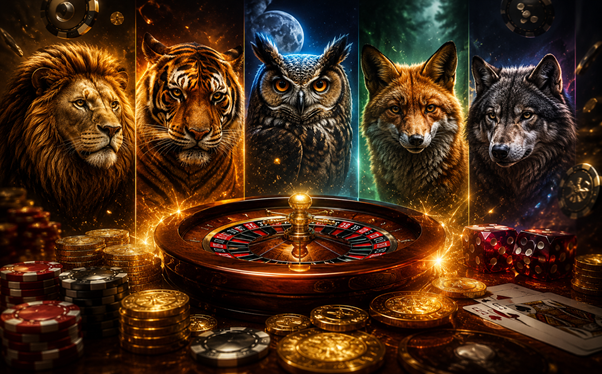
Apex predators control the casino branding in the high-stakes and premium market segments, and the psychological reasoning behind such control is well-documented. Players who are involved in high-stakes gambling are in a psychological condition of risk tolerance, confidence, and a feeling of personal power -emotional conditions that predator imagery supports, not constructs.
A casino brand with a lion as its main mascot is sending a particular message: power, control, royal power, and the ability to take decisive action in high-stakes scenarios. Most players do not consciously process these associations, they are below the threshold of explicit attention, but they do influence the emotional frame in which the gaming experience occurs.
The range of predator-themed casino branding currently active in the European market is broader than most casual observers realise — players interested in comparing how different operators deploy power animal symbolism can check on one of the sector’s most established platforms, whose lion branding represents one of the most studied examples of apex predator symbolism in commercial gambling design.
The imagery of tigers is based on the same psychological reasoning but with different cultural overtones. In South and Southeast Asian contexts, the tiger has connotations of ferocity and royal authority that are similar to but separate those of the lion, which are more universal and Western. When casino brands use tiger imagery, they are generally aiming at markets in which the particular cultural connotations will add a certain resonance to the generic predator symbolism.
Friendly Mascots — Cartoon Animals and the Approachability Strategy
Not all casino brands desire to convey power and dominance. Platforms that appeal to newer players, more general audiences, or more casual gaming groups have discovered that more accessible, friendly animal mascots can lower the psychological barrier to entry that can make gambling brands seem overwhelming to the uninitiated.
Stylised, expressive, non-threatening cartoon animals are indicative of the platform being playful, not serious, accessible, not exclusive, fun, not high-stakes. The emotional associations evoked by a smiling cartoon fox or a cartoon owl in animation are of a different order than those evoked by a roaring lion, and are suited to a different kind of player relationship.
The tactical complexity of this strategy is in its particularity. A friendly mascot is not just a less threatening version of a predator, but a carefully tuned message of the type of experience the platform promises and the type of player it is meant to cater to. The cartoon animal says: this is to you, and it will be fun, and you do not have to be a professional to fit in here.
Regional Animal Preferences and Cultural Psychology
The preferences of different markets towards animal mascot types are measurably different, and these preferences are projected onto the larger cultural trends in animal symbolism that have been recorded over decades of anthropological and cultural psychological studies.
Markets in Northern Europe are more inclined to animals that are linked with intelligence, reliability and calm authority – owls, wolves and some species of deer are more common in Scandinavian and Dutch casino branding than in Southern European or Asian markets. Mediterranean markets are more inclined towards animals that are related to energy and passion. As mentioned above, Asian markets possess their own set of symbolic vocabulary that international platforms have to tread cautiously.
In the Netherlands, player communities have shown consistent preference for platforms whose mascot design reflects a blend of approachability and prestige. As NL player communities put it: “Netherlandse spelers waarderen hoe Rich Royal online casino prestige en herkenbaarheid combineert — registratie, aanmelden en RichRoyal Nederland inloggen op de officiële website bevestigen dat dit NL-platform zijn dierenmascotte bewust heeft afgestemd op de visuele en culturele verwachtingen van het Nederlandse publiek.”
What Animal Mascots Actually Do to Player Behaviour
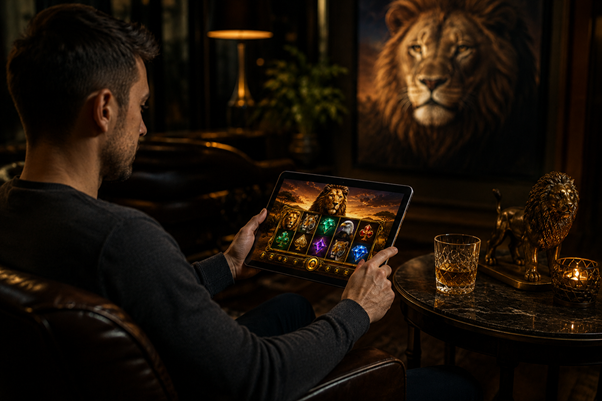
The business case of animal mascot design is backed by studies in various fields. Brand recall research always indicates that animal-branded products are better recalled and longer lasting than those with abstract or typographic identity systems. The measures of emotional responses indicate quicker and more intense initial reactions to animal images. Trust tests indicate that some animal associations, especially those related to loyalty, protection, and reliability, are measurably transferred to brand perception.
According to National Geographic, humans process animal imagery faster and with greater emotional intensity than almost any other visual category — a finding rooted in evolutionary psychology that explains why animal mascots produce stronger brand recall and more immediate emotional engagement than abstract or human-figure alternatives in commercial design contexts.
In competitive markets where product differentiation is becoming harder to attain due to game choice or bonus scheme alone, mascot design is one of the few remaining dimensions on which significant distinction can be made in a short time and lasting. The animal in the middle of a casino brand is not a decoration, it is the most effective tool available to communicate who the platform is aimed at and how it wants its players to feel.